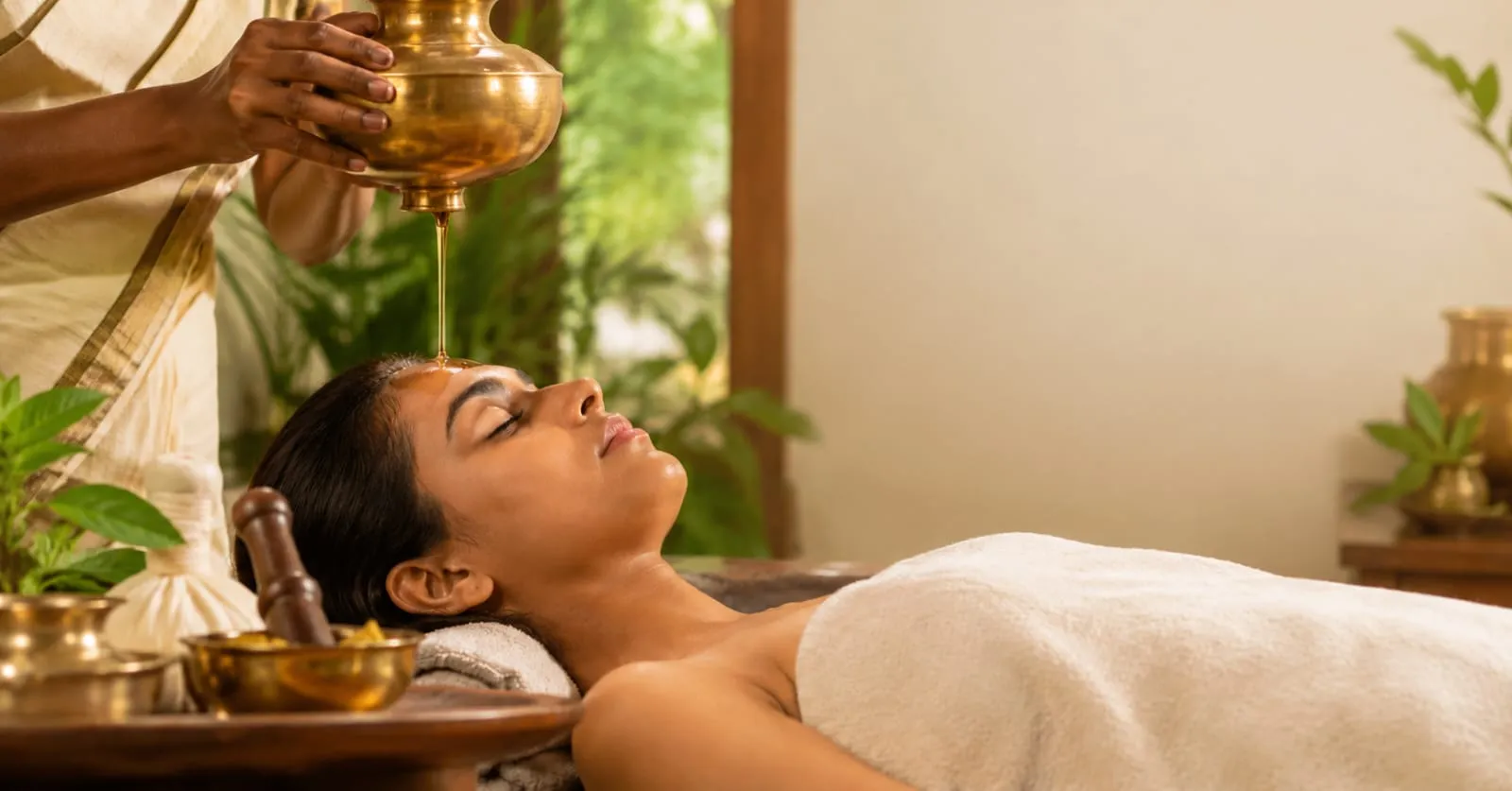
The name Panchakarma suggests five different treatments to be carried out on an individual. Most people imagine five separate processes – and that is roughly correct. However, the specific treatments to be administered in the course of Panchakarma are determined by the individual’s constitution and state of health.
The name Panchakarma suggests five different treatments to be carried out on an individual. Most people imagine five separate processes – and that is roughly correct. However, the specific treatments to be administered in the course of Panchakarma are determined by the individual’s constitution and state of health. Panchakarma refers to a set of traditional Ayurvedic therapeutic procedures which are typically executed in the form of five actions – namely Vamana, Virechana, Basti, Nasya and Raktamokshana. It is a therapeutic regimen that needs to be individualized and thus cannot be executed in fixed manner upon all individuals. It is a group of procedures that are to be administered in the form of a treatment plan.
●What Happens Before Panchakarma Procedure?
A panchakarma ayurvedic treatment usually starts with an assessment of the individual’s health status. An Ayurvedic practitioner will assess the health status of the individual by looking at his or her state of health, daily habits, diet and the way he or she digests his or her food for example. In some cases of Panchakarma, preparation is required before some of the treatments. Traditionally in Ayurveda, there are methods of preparation for Panchakarma such as Snehana or external oleation and Swedana or external sweating. All of these procedures and their order are determined by an assessment and a treatment plan. Therefore Panchakarma is not a routine procedure that is the same for everyone. Understanding the Five Panchakarma Therapies Vamana is a form of therapeutic emesis, and traditionally performed under supervision as part of purification procedures in Ayurveda. Virechana is a therapeutic process of purgation. Basti is administration of medicated preparations through rectal route and is described in different forms in Ayurveda . The administration of Ayurvedic medicines via the nasal route is called Nasya. Conventionally, raktamokshana is a bloodletting. It might seem complicated these names but the basic idea is simple: each of them is a different traditional therapeutic procedure and the choice depends on the evaluation of the individual.
● What is Panchakarma Procedure?
Usually, the panchakarma procedure is considered more than the main therapy. The normal process includes consultation and assessment, preparation, the chosen procedure and post treatment care. In Ayurvedic texts, preparatory measures for particular Panchakarma procedures are called Purvakarma. Paschat Karma means post-procedure measures to aid recovery and to gradually return to routine after the main procedure. Understanding Panchakarma in simple terms The simplest way to understand Panchakarma is to understand that it is an individualized traditional Ayurvedic therapeutic process not just five treatments one after the other. The five classical procedures differ in their methods, aims and considerations. What someone goes through can depend on their condition, assessment, preparation, therapies chosen, and recovery plan.